



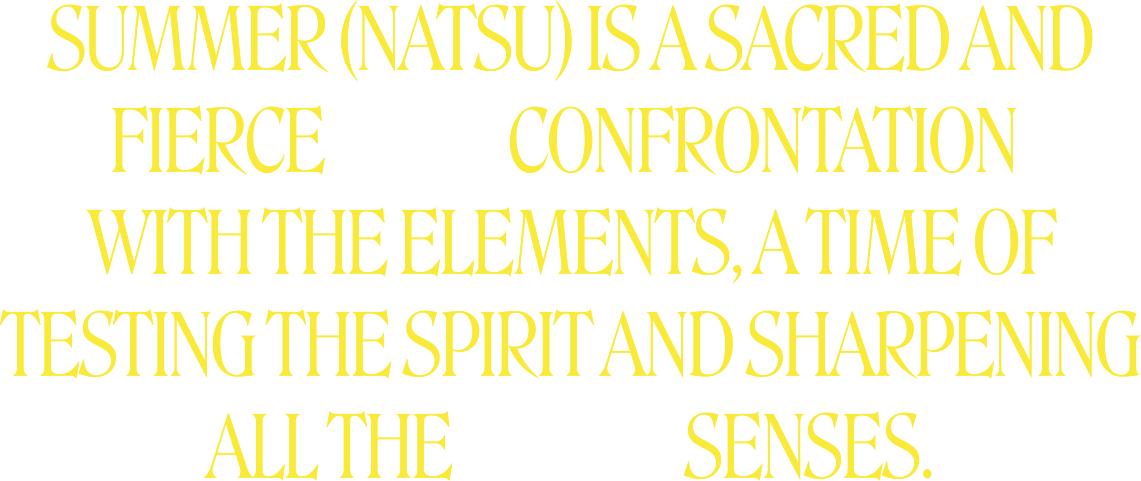
Summer in Japan is a powerful cultural shock. Western tradition is used to seeing summer as a carefree siesta, a time of absolute peace and rest. But for Japanese culture,


The poets of the past could not change the climate, but they learned to defeat the heat mentally. They created a unique language of signs, sounds, and images capable of giving a breath of saving coolness by the mere power of thought.
In the modern world, travelers are increasingly given urgent advice: "Do not come to Japan in the summer." July and August have turned into an extreme survival test. The exhausting, 100% humidity, the suffocating smog of megacities, and the merciless sun force tourists to hide under air conditioners, turning a long-awaited trip into dashes between shelters. The real Japanese summer can be too cruel to a person.









of Japanese culture
We will move into a completely different space -
We don't even need to buy plane tickets or suffer through Tokyo's hot, smoky weather. Through the lens of haiku, we will make a much deeper immersion.









The real tourist season is fleeting and temperamental, but poetry grants us an amazing superpower. We are setting off on a journey to a place where our very own, inner, and "Endless Summer" awaits us.
There are no rigid boundaries, grades, or strict deadlines here. You can complete all the creative assignments at your own most comfortable pace, enjoying every single step of this journey.
This course is designed for people who are in love with Japan, seeking inspiration, or simply looking to discover something completely new.
but we will also step into the shoes of a poet yourself, creating your own unique haiku.
we will not only learn how the great masters of the past — Basho, Buson, and Issa — used to think
Together, we will gently immerse ourselves in history and discover the magical world of Japanese poetry.
[6]
[5]
[4]
[3]
[2]
[1]
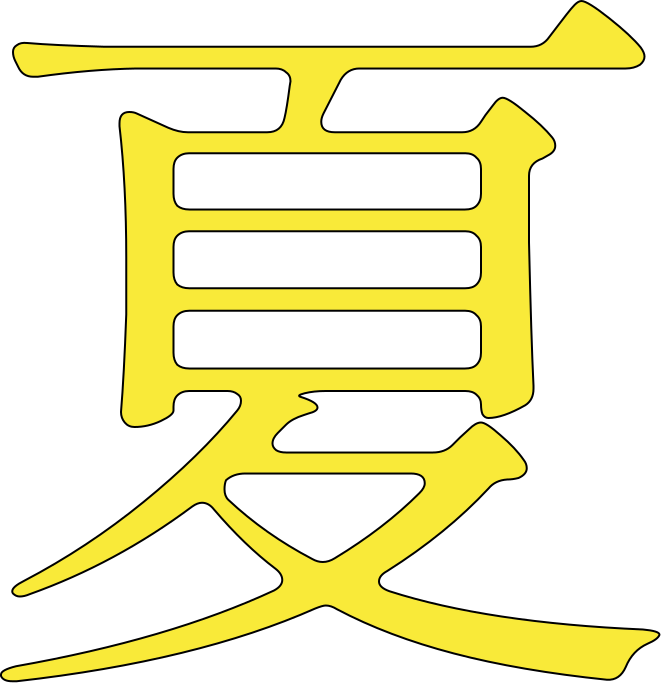
To this day, Japan’s major summer festivals (Matsuri) are accompanied by traditional Bon Odori dances. This very spirit of dance is deeply woven into the word "summer" itself.
*please note - In classical haiku, seasons follow the traditional calendar, meaning poetic summer begins 1.5 months earlier than ours (May, June, July)
For ancient people, summer was not a time of passive relaxation.
It was the absolute peak of nature’s vital forces, a time of wild, exuberant growth that demanded ritual respect and sacred dances for the sake of the future harvest.
It was the absolute peak of nature’s vital forces, a time of wild, exuberant growth that demanded ritual respect and sacred dances for the sake of the future harvest.
In its earliest form—found on oracle bones and bronze vessels—this kanji depicted a person performing a ritual dance under the sun.
Can you even imagine Japan without its kanji? Even if you’ve never studied Japanese, try to remember the character for summer











refers to Lake Biwa (Japan's largest lake)
Practice
At the end of our course, you will return to this very first three-line poem. You’ll be surprised by how much your perspective changes once you learn the secrets of the great masters of the past. But this first, heartfelt snapshot is the most precious one.
Take a couple of minutes, close your eyes, and take a deep breath.
Think about it: what does your summer feel like at this exact moment? What is around you? What specific detail or emotion caught your attention today?
Write down this feeling with word summer in three short lines.
Take a snapshot of your personal summer right here, right now. Don’t think about rules, syllables, rhymes, or Japanese history.
The poet contrasts the stifling, heavy troubles of human life with the cool, effortless floating of waves. The poem teaches us to let go of the "heat" of worldly anxiety and simply drift like a wave.
means "the summer of this mortal world." It carries a deep Buddhist undertone, where "this world" (yo) is often seen as a place of heat, struggles, and suffering.
The Lake
Yo no natsu
Yo no natsu ya / kosui ni ukabu / nami no ue
世の夏や湖水にうかぶ波の上
Matsuo Basho



The white open fan (ōgi)
In haiku, it is essential to develop the five senses—this helps you break away from cliché descriptions and capture a living moment. Here is what you can experience through different senses during a Japanese summer:



The white moon
Flowers
Stars
Insects
Dewdrops at dawn
Fireworks



The juicy coolness of a watermelon
The taste of pure well water
The sharp, sweet aroma of lush, wild grass
The scent of moss in temple gardens
The smoke from street food stalls at Matsuri festivals
The faint fragrance of mosquito-repelling incense
The scent of the earth after a summer downpour
A quiet splash of water in the river
The fūrin wind chime
A roll of thunder
The ringing chorus of cicadas






Cold sōmen noodles served with ice
Refreshing iced matcha
Sweet strawberry syrup in kakigori


The feeling of bare feet on the grass
A light, almost weightless touch of the night breeze on the skin
Heavy, humid air

Describe your exact reality at this very moment. That is the ultimate secret of haiku—being in the here and now.
Sight: Spot an object that reminds you of coolness, freshness, or a beautiful contrast.
Hearing: Pause for a moment and catch one specific sound.
Smell: Breathe in the air around you. What does this summer smell like?
Taste: What is the most memorable part of summer, and what does it taste like?
Touch: Feel your physical connection with the world.
Hearing: Pause for a moment and catch one specific sound.
Smell: Breathe in the air around you. What does this summer smell like?
Taste: What is the most memorable part of summer, and what does it taste like?
Touch: Feel your physical connection with the world.
Take a close look around you (wherever you are right now—in your room, office, or anywhere else). Your task is to tune into your inner radars and find one object or sensation for each of the 5 categories:
Practice



Very soon, the next part of our journey into the world of haiku will be out!
We will dive into the history of this art form, break down its anatomy, and learn how to write haiku in English. We’ll also discover how nature served as a secret code between the haiku poet and the reader.
Stay tuned—the update is coming to our website and Instagram @matchamatea!
We will dive into the history of this art form, break down its anatomy, and learn how to write haiku in English. We’ll also discover how nature served as a secret code between the haiku poet and the reader.
Stay tuned—the update is coming to our website and Instagram @matchamatea!